








Choosing the right crypto wallet is one of the most important decisions when entering the world of Web3, blockchain, and cryptocurrencies. In this guide we compare Trust Wallet vs MetaMask, explain their key features, supported blockchains, token swaps, security model, and overall user experience. By the end of this article you will clearly understand which wallet may be the better option for your needs in 2026.
Two of the most widely used crypto wallets today are Trust Wallet and MetaMask. If you search online for a comparison, you will quickly see the debate: Trust Wallet vs MetaMask. Some users believe one is the best mobile wallet, while others say the other wallet is better for interacting with decentralized applications.
This article explains the key differences between these wallets in simple English. It is written especially for beginners who are just starting to explore Web3, blockchains, and digital assets.
We will look at how Trust Wallet and MetaMask work, what blockchains they support, how swaps happen, how safe they are, and what users complained about in recent versions. We will also discuss security risks such as phishing, centralized swap services, and situations where transactions may get stuck.
Understanding Crypto Wallets First
Before comparing Trust Wallet vs MetaMask, it helps to understand what a crypto wallet actually is.
A crypto wallet does not physically store coins the way a bank stores money. Instead, it stores private keys that allow you to control your digital assets on a blockchain. These keys prove ownership of your cryptocurrencies.
Both Trust Wallet and MetaMask are non-custodial wallets. This means users keep full control over their private keys. No company can directly access your funds. The wallet simply provides a user interface that allows you to interact with the blockchain.
When you create a wallet, you receive a seed phrase. This phrase is usually 12 or 24 words and acts as a backup for your wallet. Anyone who knows your seed phrase can control your funds, so it must be stored securely.
Unlike a custodial wallet provided by some exchanges, a non-custodial wallet does not hold your coins on a company server. Instead, transactions happen directly on the blockchain network.
This design is the foundation of Web3, decentralized finance, and decentralized applications.
What Is Trust Wallet?
Trust Wallet is a mobile-first crypto wallet originally created in 2017 and later acquired by Binance. Today it is one of the most popular mobile wallets in the world.
The wallet focuses on a simple and user-friendly experience. Most people use Trust Wallet through its mobile app on iOS or Android. It is designed mainly for smartphones rather than desktop computers.
The reason Trust Wallet became popular is its strong multi-chain support. Trust Wallet supports many different blockchains, which allows users to store a large variety of crypto assets.
Among the networks supported are:
- Bitcoin
- Ethereum
- Solana
- Polygon
- Avalanche
- Binance Smart Chain
- BNB Chain
Because of this multi-chain design, users can manage many cryptocurrencies inside one mobile wallet.
Another important feature is the built-in dapp browser. This allows users to access dapps directly from the mobile app. Through this browser, people can interact with DeFi, NFT marketplaces, games, and other decentralized applications.
Trust Wallet offers built-in token swaps, staking, and an in-app system for buying cryptocurrencies with fiat through partner services. The wallet also supports NFTs, letting users store and view their NFT collections directly inside the mobile app.
For many beginners, Trust Wallet feels easier to understand because everything happens inside one simple application.
What Is MetaMask?
MetaMask is one of the most well-known tools in the Ethereum ecosystem. It started as a browser extension and became a core gateway to Web3.
Unlike Trust Wallet, which is mainly mobile-first, MetaMask originally focused on desktop browsers such as Chrome and Firefox. The browser extension connects directly to decentralized applications, allowing users to interact with dapps without leaving their browser.
Over time, MetaMask also introduced mobile apps for Android and iOS, but the wallet is still strongly associated with its browser extensions.
MetaMask offers deep integration with Ethereum-based platforms. Many DeFi protocols, NFT marketplaces, and blockchain games support MetaMask as the primary login method.
The wallet supports all EVM-compatible networks. These include:
- Ethereum
- Polygon
- Avalanche
- Binance Smart Chain
- Bitcoin
- Tron
- Other EVM chains
In 2026 MetaMask also launched native support for the Tron (TRX) network, enabling users to manage TRX assets, stake TRX, send USDT on the TRON blockchain, and connect to Tron-based decentralized applications directly from the wallet interface.
Because of this design, MetaMask is extremely popular among developers and advanced users who interact with decentralized finance platforms.
However, recent updates have expanded MetaMask into a multi-chain wallet. The latest versions now support Bitcoin (BTC) directly, allowing users to store, send, receive, and swap BTC inside the wallet alongside other assets. MetaMask still focuses heavily on Ethereum, ETH, and tokens built on EVM chains, but the wallet has recently expanded beyond the traditional Ethereum ecosystem to support additional networks such as Bitcoin, Solana, and Tron as part of its multichain strategy.
Trust Wallet vs MetaMask: Key Differences
When comparing Trust Wallet vs MetaMask, the first difference appears in how they are designed. Trust Wallet focuses on a mobile-first experience. MetaMask started as a browser extension. This difference affects the entire user experience. For example, Trust Wallet’s interface is designed for quick access to balances, tokens, NFTs, and token swaps. Everything is presented in a simple dashboard that beginners can easily understand. MetaMask, on the other hand, acts more like a gateway to the Ethereum ecosystem. It connects your wallet to decentralized applications running in your browser.
Another difference is multi-chain support.
Trust Wallet supports a wider range of blockchains natively, including Bitcoin, Solana, and BNB networks. MetaMask mainly supports EVM-compatible networks such as Ethereum, Polygon, and Avalanche.
In practice, this means Trust Wallet can manage more types of cryptocurrencies out of the box.
However, MetaMask offers deeper integration with DeFi, dapps, and developer tools.
Quick comparison
- Trust Wallet is a mobile-first crypto wallet with strong multi-chain support, including Bitcoin, Solana, and Binance Smart Chain.
- MetaMask is widely used as a browser extension for interacting with dapps, DeFi, and the Ethereum ecosystem.
- Both wallets are non-custodial, meaning users keep full control over their private keys and digital assets.
Security and Control of Private Keys
Both wallets are non-custodial, meaning users keep full control of their private keys. This is a major advantage over a custodial wallet on a centralized exchange. Your funds are secured by your seed phrase and private keys, not by a company account. Both Trust Wallet and MetaMask allow optional biometric authentication on mobile apps, including fingerprint or face recognition.However, the actual security model still depends on the seed phrase. If someone steals your phrase through phishing, malware, or fake dapps, they can instantly access your funds. This type of attack is one of the most common problems in the Web3 ecosystem.
Both wallets warn users about phishing websites and suspicious dapps, but responsibility still falls on the user.
Both wallets rely on a seed phrase for wallet recovery. If a device is lost, users can restore their crypto assets on another device using the same phrase. Because of this, storing the seed phrase offline is essential for protecting digital assets in any non-custodial wallet.
Fees, Swaps, and Hidden Costs
Many people assume Trust Wallet or MetaMask perform swaps directly on the blockchain. In reality, the situation is more complex. Inside Trust Wallet, users can perform token swaps using the in-app exchange system. The wallet often advertises 0% swap fees, which can sound very attractive. However, the actual swapping usually happens through partner services. These may include decentralized exchanges, but sometimes they also use centralized liquidity providers similar to services like SimpleSwap. This means the wallet itself may not charge a fee, but the partner exchange adjusts the price through the swap rate.
In practice, users often pay hidden costs through:
- Spread in the exchange rate
- Liquidity provider fees
- Network gas fees
Therefore, a swap that appears to have 0% commission can still cost several percent in the final price. MetaMask also offers built-in token swaps. When users initiate swapping, the wallet aggregates quotes from multiple providers. The MetaMask swap system may include decentralized exchanges such as Uniswap or other liquidity sources. However, MetaMask usually charges a small service fee in addition to normal gas fees. Both wallets rely on real-time quotes from liquidity providers, which means prices may change between the moment the swap begins and when it executes.
Because of these differences, experienced users often compare Trust Wallet vs MetaMask when deciding where to perform token swaps. The overall cost of swapping depends not only on wallet fees but also on gas fees, liquidity providers, and the selected blockchain network.
Centralized Swap Services and Risks
One important topic rarely explained to beginners is how centralized swap partners work. When a wallet uses a centralized service for token swaps, your transaction may pass through an external exchange.
In some cases this creates additional risks. These services may perform KYC or AML checks. If their system flags a transaction as suspicious, the exchange could temporarily freeze the funds.
This is rare but documented. Users sometimes report cases where a swap started normally but later required identity verification. Until the verification process was completed, the funds remained locked. Because the wallet itself does not control the exchange partner, support teams cannot always resolve the situation quickly. This is why some advanced users prefer purely decentralized DeFi swaps directly through dapps.
When a swap happens directly on a blockchain, no centralized party can freeze the transaction. However, decentralized swaps may still fail due to liquidity issues or incorrect gas fees.
Can Transactions Get Stuck?
Yes, transactions can sometimes appear stuck. This happens most often due to gas fees. If the network fee is set too low, the transaction may remain pending on the blockchain for a long time. This situation is common on Ethereum, especially during periods of high demand in the Ethereum ecosystem.
However, when using centralized swap providers, another issue can occur. The service may temporarily pause the transaction while waiting for confirmations on different blockchains. During cross-chain swapping, funds may move between networks such as Ethereum, Polygon, or Avalanche through bridges or internal liquidity systems.
If one side of the transaction experiences delays, users may believe the funds disappeared when they are actually still processing.
Memo and Tag Support
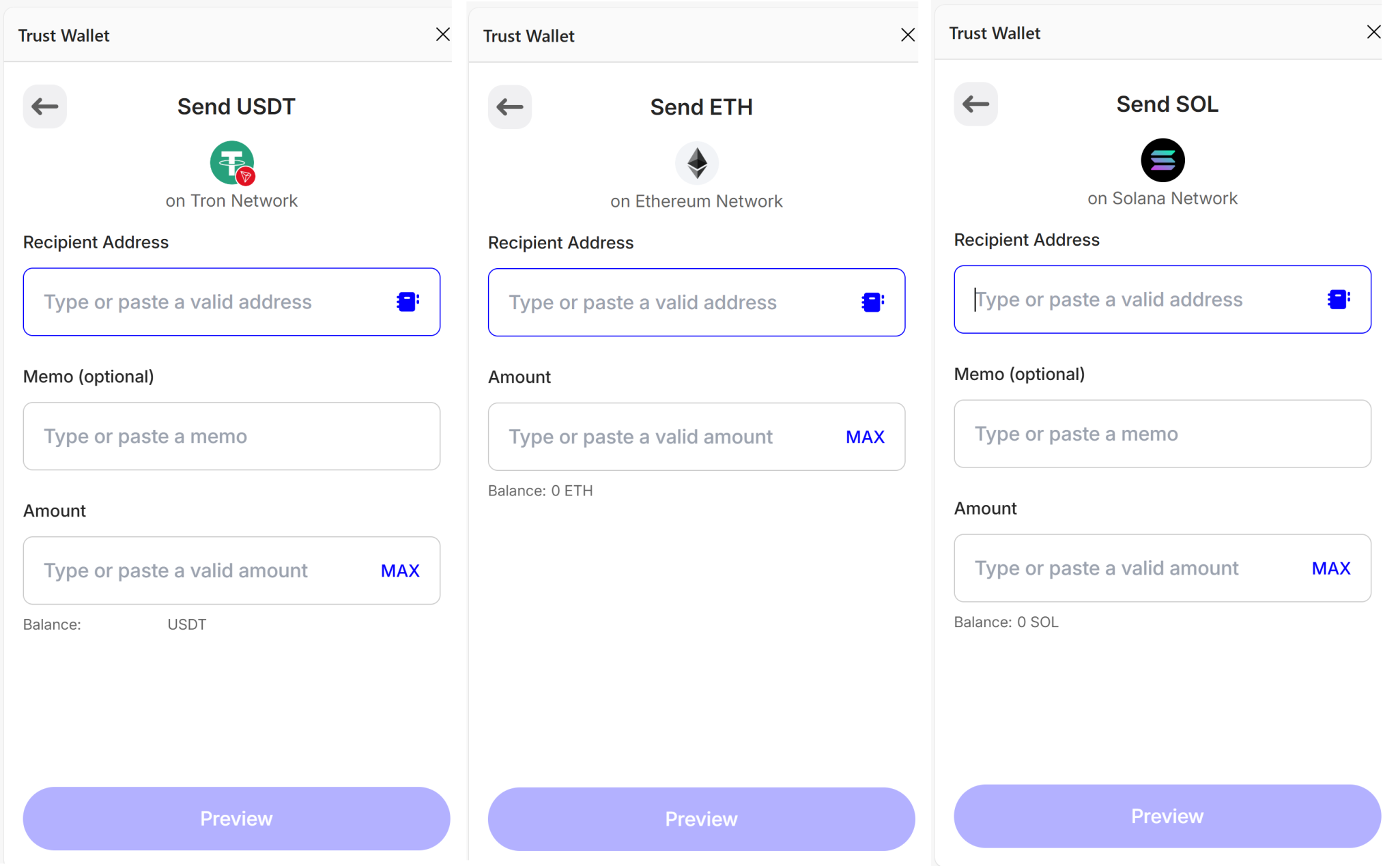
Some services require an additional identifier called a MEMO or tag when sending funds. This is common with exchanges and certain networks such as XRP or some centralized deposit systems. The memo field allows the receiving platform to identify the user account that should receive the funds.
In Trust Wallet, the ability to enter a memo depends on the specific blockchain and token.
For example, when sending assets on networks that require it, the wallet interface usually includes an optional memo field.
Read more about MEMO in our Medium Blog.
However, users must always double-check the destination instructions.
In MetaMask, the situation is different. Since MetaMask focuses mainly on Ethereum-based networks, most transactions do not require a memo field. Ethereum transactions rely only on wallet addresses. If a service requires a memo, it usually means the transaction is being sent to a centralized exchange deposit address.
Therefore users should carefully follow the instructions provided by the receiving platform.
Bugs and User Complaints in 2026
Like any software, both wallets occasionally introduce bugs after updates.
In early 2026, several Trust Wallet users reported synchronization problems after updating the mobile app. Some tokens temporarily displayed incorrect balances until the wallet refreshed the data from the blockchain.
Another issue involved NFT display errors, where certain NFTs disappeared from the gallery even though they still existed on the blockchain. These problems usually resolved after clearing the wallet cache or importing the wallet again. Some users also complained about slower in-app swaps during periods of heavy network activity.
In MetaMask, several updates in 2026 focused on improving the browser extension performance. However, some users experienced problems connecting to certain dapps after updates. There were also reports that custom EVM chains occasionally disappeared from the network list after reinstalling the wallet. The development team later released patches addressing these issues.
Despite these bugs, both wallets remain widely used and actively maintained.
Hardware Wallet Compatibility
Advanced users often connect their wallet to a hardware wallet for additional security.
Both Trust Wallet and MetaMask support hardware devices. MetaMask works well with devices such as Trezor and other hardware wallets. This allows users to sign transactions securely while keeping their private keys stored offline. A hardware wallet dramatically reduces the risk of malware stealing your keys.
Trust Wallet also supports hardware integration in certain scenarios, although it is more commonly used as a standalone mobile wallet.
For users managing large amounts of digital assets, combining MetaMask with a hardware wallet is often considered the safest approach.
Both wallets play an important role in the Web3 ecosystem. They act as a gateway between users and decentralized applications, allowing people to interact with NFT marketplaces, DeFi platforms, and other blockchain services without relying on centralized accounts.
Which Wallet Is Better for Beginners?
When discussing Trust Wallet vs MetaMask, many people ask which one is easier. For most beginners, Trust Wallet feels more intuitive. Its mobile-first design, simple user interface, and wide multi-chain support make it accessible for people who are new to cryptocurrencies. Users can quickly view balances, manage NFTs, perform staking, and execute token swaps without installing a browser extension.
However, users who plan to explore DeFi, dapps, and the Ethereum ecosystem may eventually prefer MetaMask. The browser extension integrates directly with many decentralized applications, making it the standard login method for Web3 platforms.
Does MetaMask Support Bitcoin?
One of the most common questions is whether MetaMask supports Bitcoin.
In earlier years the answer was no because MetaMask was originally designed for the Ethereum ecosystem and EVM-compatible networks. However, this changed in December 2025, when MetaMask introduced native Bitcoin support as part of its multichain expansion.
Today users can buy, send, receive, and swap BTC directly inside MetaMask, and a Bitcoin address is automatically generated after updating to the latest wallet version.
Which Wallet Is the Most Trusted?
Both wallets are widely respected in the industry. MetaMask is one of the most recognized tools in the Web3 ecosystem and is considered essential for interacting with DeFi and dapps. Meanwhile, Trust Wallet is one of the most widely downloaded mobile apps in the crypto space. Both wallets are open-source in key components and undergo regular security reviews.
However, trust ultimately depends on how users manage their seed phrases and avoid phishing attacks.
Which Web3 Wallet Is Better in 2026?
The answer depends on how you plan to use your wallet.
If your goal is simple storage of cryptocurrencies, NFTs, and occasional token swaps, Trust Wallet may be the better option. If you frequently interact with decentralized finance, Ethereum-based dapps, and developer tools, MetaMask may be the better option.
For many people, the real solution is to use both.
Which Is the Best Crypto Wallet for You?
Choosing the best crypto wallet depends on your priorities.
You may prefer Trust Wallet if:
- You want a simple mobile wallet
- You hold many types of cryptocurrencies
- You want built-in staking and NFT support
You may prefer MetaMask if:
- You frequently use DeFi
- You interact with dapps
- You use a browser extension environment
Both wallets provide full control over private keys, support Web3, and connect users to the rapidly growing world of blockchains and digital assets.
Disclaimer
Ultimately, the choice between Trust Wallet vs MetaMask depends on how you use cryptocurrencies. Some users prefer the mobile-first user experience of Trust Wallet, while others rely on MetaMask browser extensions for interacting with dapps, DeFi, and the broader Web3 ecosystem.
This article is for educational purposes only and should not be considered financial advice. The cryptocurrency market carries risks, and users should always research wallets, blockchains, and DeFi platforms before storing funds.
Protect your seed phrase, avoid suspicious dapps, and always verify transaction details before sending crypto assets.