
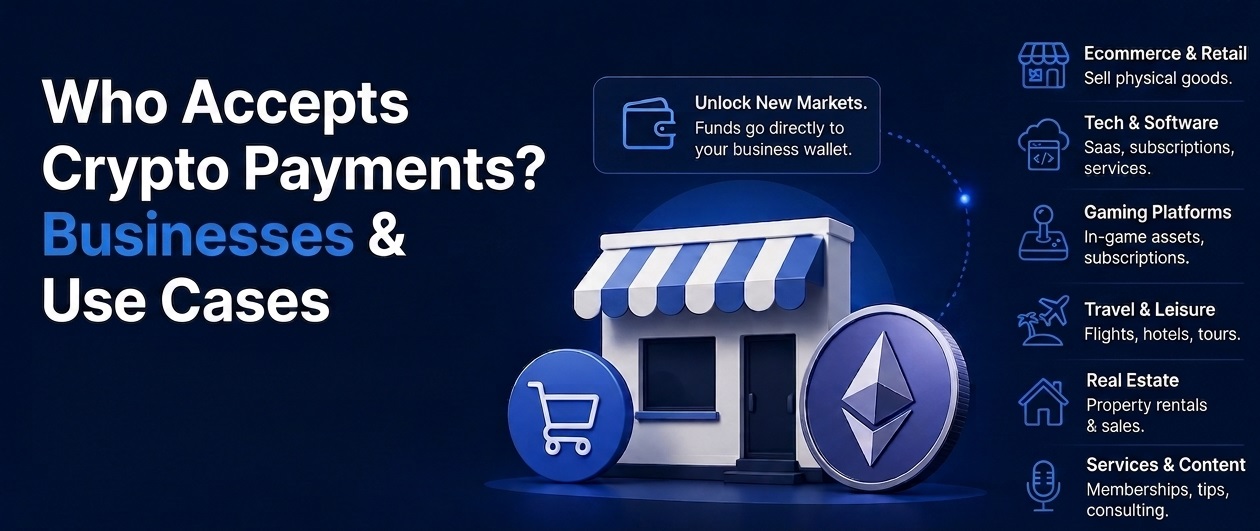








Who Accepts Crypto Payments? Businesses & Use Cases
Crypto is no longer something you can only trade – you can spend it. From online stores to travel sites, gaming platforms and charities, a growing list of businesses now accept Bitcoin and stablecoins at checkout. At Bcon Global we help companies join that list every week, so this guide shows who accepts crypto payments today, what you can buy with it, why businesses are adopting it, and how your own business can start.
Understanding who already accepts crypto tells you a lot about where the trend is heading – and how easy it now is to offer. Let us look at the landscape.
Who Accepts Crypto Payments Today?
Acceptance has spread well beyond tech early-adopters. While specific brands change over time, the categories that consistently accept crypto include large online retailers, travel and booking sites, gaming and digital-goods platforms, VPN and hosting providers, and a rising number of small and mid-sized online stores. Many accept crypto directly, and many more do so through payment gateways and crypto-linked cards.
The pattern is clear: businesses that sell online, serve a global audience, or deal in digital products are the fastest to adopt. Where card payments create friction – cross-border fees, chargebacks, limited access – crypto solves a real problem.
Industries Leading Crypto Adoption
Some sectors are further ahead than others, driven by their customers and their pain points. The leaders are:
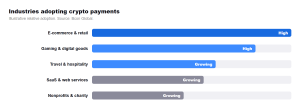
- E-commerce and retail – the biggest category, offering crypto to cut fees and reach global buyers.
- Gaming and digital goods – fast, borderless payments suit digital delivery perfectly.
- Travel and hospitality – booking sites and agencies accept crypto for international customers.
- SaaS and web services – hosting, VPNs and software firms serve a crypto-friendly audience.
- Nonprofits and charities – accept crypto donations for transparency and lower fees.
As the chart suggests, online-first industries lead, but adoption is broadening into services and causes of every kind.
What Can You Buy With Crypto?
The honest answer in 2026 is: almost anything. Through direct acceptance, gateways and crypto cards, people use crypto to buy electronics, software subscriptions, travel, gift cards, digital services, event tickets and everyday goods. Stablecoins like USDT and USDC are increasingly used for invoices and larger purchases because they hold a steady value.
Even where a merchant does not accept crypto directly, crypto debit cards let holders spend at any card-accepting store. So the practical reach of crypto spending is far wider than the list of direct acceptors alone.
Why Businesses Accept Crypto
Adoption is not about hype; it is about concrete benefits. The reasons businesses give most often are:
- Lower fees than card processing, especially on cross-border sales.
- No chargebacks, since on-chain payments are final.
- New and global customers who prefer crypto or lack easy card access.
- Fast settlement directly to a wallet they control.
- A modern brand signal that appeals to a tech-savvy audience.
For many merchants, any one of these justifies offering crypto. Together, they explain why the list of acceptors keeps growing.
Do Customers Actually Pay With Crypto?
Yes, and increasingly so, especially in specific segments. Digital-native shoppers, international buyers, privacy-conscious customers and crypto holders looking to spend gains all pay in crypto when given the option. Offering it does not replace cards – it adds a payment method that captures sales you would otherwise miss.
You do not add crypto to replace cards. You add it to capture the customers who wanted to pay in crypto and left because they couldn’t.
The cost of offering it is low, and the downside of not offering it is quiet but real: every customer who wanted to pay in crypto couldn’t simply buy elsewhere.
How Your Business Can Start Accepting Crypto
Joining the list is far simpler than it looks. You do not need to hold crypto or understand blockchain deeply. The steps are short:
- Choose a non-custodial gateway so funds land in a wallet you control.
- Connect your wallet address to receive payments.
- Add the option to your store with a plugin or payment link.
- Enable the coins customers use – Bitcoin plus stablecoins like USDT and USDC.
- Test a payment, then go live.
That is how Bcon Global works. It is non-custodial with no KYC and a flat 1% fee, payments settle directly to your wallet, and it supports BTC, ETH, USDT, USDC and more across major networks. Most businesses go from sign-up to accepting crypto the same day, which is exactly why the list of acceptors keeps growing.
Frequently Asked Questions
Who accepts crypto payments?
A broad and growing range of businesses – online retailers, travel and gaming sites, SaaS and hosting providers, and nonprofits – accept crypto directly or through gateways and crypto cards.
What can you buy with crypto?
Almost anything: electronics, software, travel, gift cards, digital services and everyday goods. Crypto cards also let holders spend at any card-accepting store.
Which industries accept crypto the most?
E-commerce and digital goods lead, followed by gaming, travel, SaaS and web services, and charities accepting crypto donations.
Why do businesses accept crypto?
For lower fees, no chargebacks, faster settlement, access to global and crypto-native customers, and a modern brand image.
How can my business start accepting crypto?
Choose a non-custodial gateway, connect a wallet, add a plugin or payment link, enable Bitcoin and stablecoins, and test a payment. Most businesses live the same day.
Crypto acceptance has gone mainstream across e-commerce, digital services, travel and charities, and customers increasingly pay with Bitcoin and stablecoins when given the option. Offering it is low-cost, adds sales, and signals a modern brand.
Joining the list is quick: Bcon Global lets your business accept crypto directly to your own wallet – non-custodial, no KYC, 1% fee – usually the same day you sign up.