








Crypto Invoicing: How to Bill Clients and Get Paid in Crypto
If you freelance or run a service business, getting paid in crypto can be faster and cheaper than waiting on bank transfers – especially across borders. A crypto invoice works much like a normal one, except your client pays in Bitcoin or a stablecoin instead of fiat. At Bcon Global we help businesses and freelancers get paid directly to their own wallets, so this guide explains how crypto invoicing works, how to create one, best practices, and how to receive payment without a middleman holding your funds.
Crypto invoicing is simpler than it sounds, and it removes a lot of the friction of international billing. Let us start with why it is worth doing.
Why Invoice in Crypto?
Crypto invoicing solves problems that plague traditional billing, particularly for online and cross-border work. The benefits are practical:
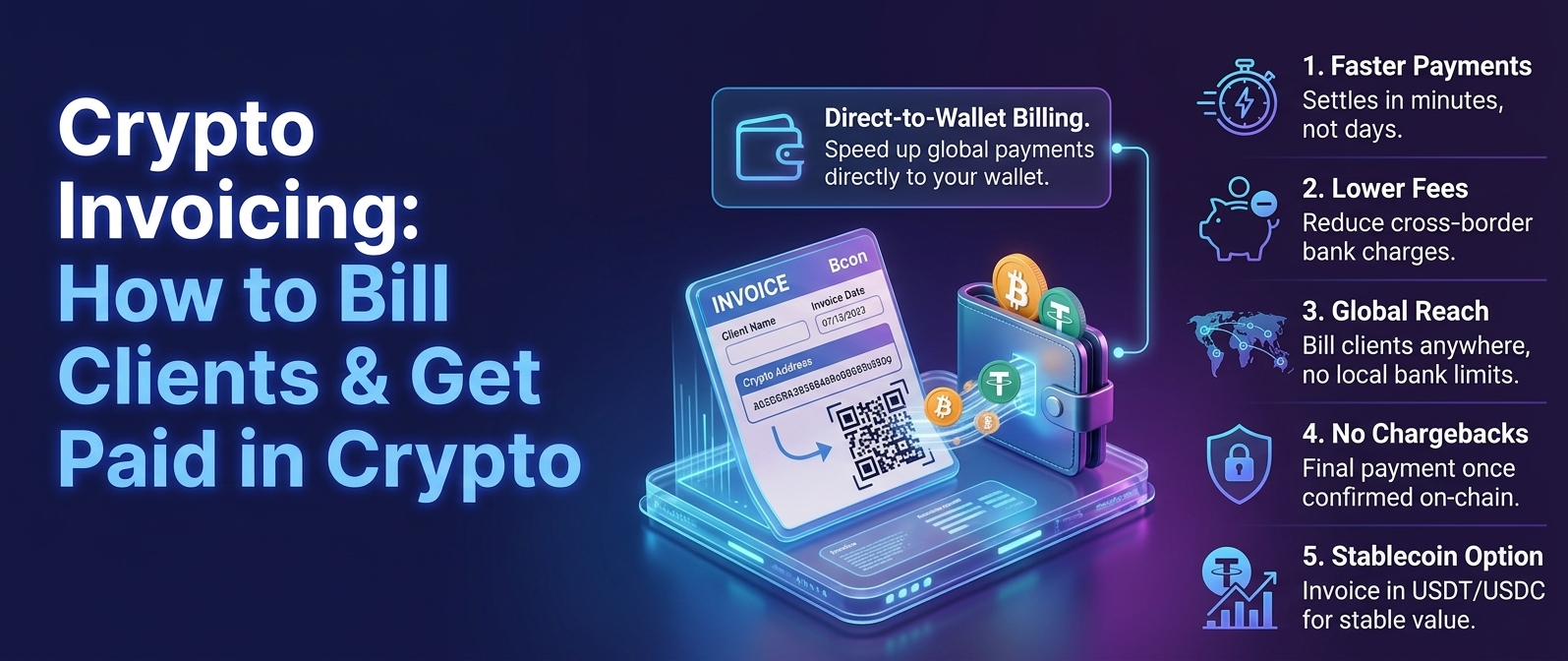
- Faster payment. Crypto settles in minutes, not the days an international wire can take.
- Lower fees. No hefty cross-border or intermediary bank charges – often just a small network fee.
- Global reach. Bill clients anywhere without worrying about their banking system.
- No chargebacks. Once confirmed, the payment is final.
- Stable value option. Invoice in USDT or USDC and the amount holds its dollar value.
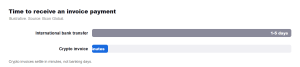
As the chart shows, the speed difference alone is compelling. For freelancers who currently wait days for overseas payments, crypto invoicing can mean getting paid the same afternoon.
How Crypto Invoicing Works
A crypto invoice is a request for payment that specifies the amount, the coin and the network, and gives the client a way to pay – usually a payment link, a QR code or a wallet address. When the client pays, the funds move on-chain to your wallet, and you (or your tool) confirm receipt.
The key difference from a plain wallet address is that a proper crypto invoice ties the payment to a specific job and amount, and often fixes the network so the client cannot pay on the wrong chain. That structure is what turns “here’s my address” into real invoicing.
How to Create and Send a Crypto Invoice
Setting up crypto billing takes only a few minutes. Here is the typical flow:
- Choose how you will get paid – a non-custodial gateway with payment links is easiest.
- Set the amount in fiat (for example, $500) and let the tool convert it to the crypto amount.
- Pick the coin and network – Bitcoin for reach, or USDT/USDC on a low-fee network for stable value.
- Generate a payment link or QR code that fixes the amount and network.
- Send it to your client by email or message, like any invoice.
- Confirm the payment when it lands, and record it for your accounting.
Because the link fixes the coin and network, your client cannot accidentally underpay or use the wrong chain, which removes the most common invoicing headaches.
Best Practices for Crypto Invoices
A few habits keep crypto billing smooth and professional:
- Invoice in stablecoins for larger jobs so the value does not move before the client pays.
- Set a short payment window or note the rate’s validity, since coin prices change.
- Always include the network clearly (for example, USDT on Tron/TRC-20).
- Keep clean records of the fiat value at the time of payment for taxes.
- Send a receipt confirming the transaction once it settles.
These steps make crypto invoices as reliable and clear as any fiat invoice, and they protect both you and the client.
Get Paid Directly to Your Own Wallet
Here is the detail that matters most: who holds the money when your client pays. Some invoicing tools route payments through their own accounts and pay you out later, which reintroduces delays and custody risk. The better model sends the payment straight to a wallet you control.
The best crypto invoice pays you, not a middleman. When the client pays, the funds should already be in your wallet – with nothing to withdraw and no one to wait on.
That is how Bcon Global works. You generate a payment request, and when the client pays, the crypto settles directly to your own wallet – non-custodial, no KYC, flat 1% fee. Bcon confirms the payment and notifies you, but it never holds the funds. For freelancers and businesses, that means getting paid instantly and keeping every payment under your control.
Frequently Asked Questions
How do I invoice a client in crypto?
Set the amount in fiat, choose the coin and network, generate a payment link or QR code, and send it to the client. When they pay, the crypto lands in your wallet and you confirm it.
How do I get paid in Bitcoin?
Create a payment request for the amount in BTC (or price it in dollars and convert), share the link or address, and the client sends Bitcoin to your wallet. A gateway confirms it automatically.
What is a crypto payment link?
A link that opens a pre-filled payment request with a set amount, coin and network, so the client can pay in a couple of taps without copying an address.
Is crypto invoicing good for freelancers?
Yes. It is faster and cheaper for international clients, avoids bank delays and fees, and can use stablecoins to keep the value steady.
Do I need KYC to invoice in crypto?
With a non-custodial gateway like Bcon, no KYC is required – you connect a wallet and start billing, and payments settle directly to you.
Crypto invoicing lets you bill clients anywhere and get paid in minutes instead of days, with lower fees and no chargebacks. Price in stablecoins for larger jobs, always specify the network, and keep clean records for taxes.
To get paid directly and keep control, Bcon Global turns a payment request into an instant, non-custodial settlement to your own wallet – no KYC, 1% fee – so invoicing in crypto is as simple as sending a link.